Do you need to clean or cover the resin and hardener pumps between uses? If so, how?
Thanks!
Do you need to clean or cover the resin and hardener pumps between uses? If so, how?
Thanks!
if you mean between working sessions (e.g.. i am going to bed now and willl pick up this project later this week), i always wrap a little tab of blue tape over the end of the spigot when i end a session. this prevents drips and the little crud that develops on the spigot if left in the open air. i do also try to keep things clean and will wipe down the spigot with a little bit of a white-vinegar dampened paper towel if i have epoxy spilled on the spigots or containers. fwiwi, i always set my epoxy up on a little sheet of disposable plastic as spills will inevitable happen and i want to protect my work table form epoxy. while my sentence is long here...doing what i am describing is only about 2 inches of blue tape per spigot and 30 seconds. last point on this, depending where you live, is i will move my epoxy inside if the temps overnight have the possibility of dropping. again, i use a plastic-lined box to ensure the epoxy does not end up somewhere unexpected.
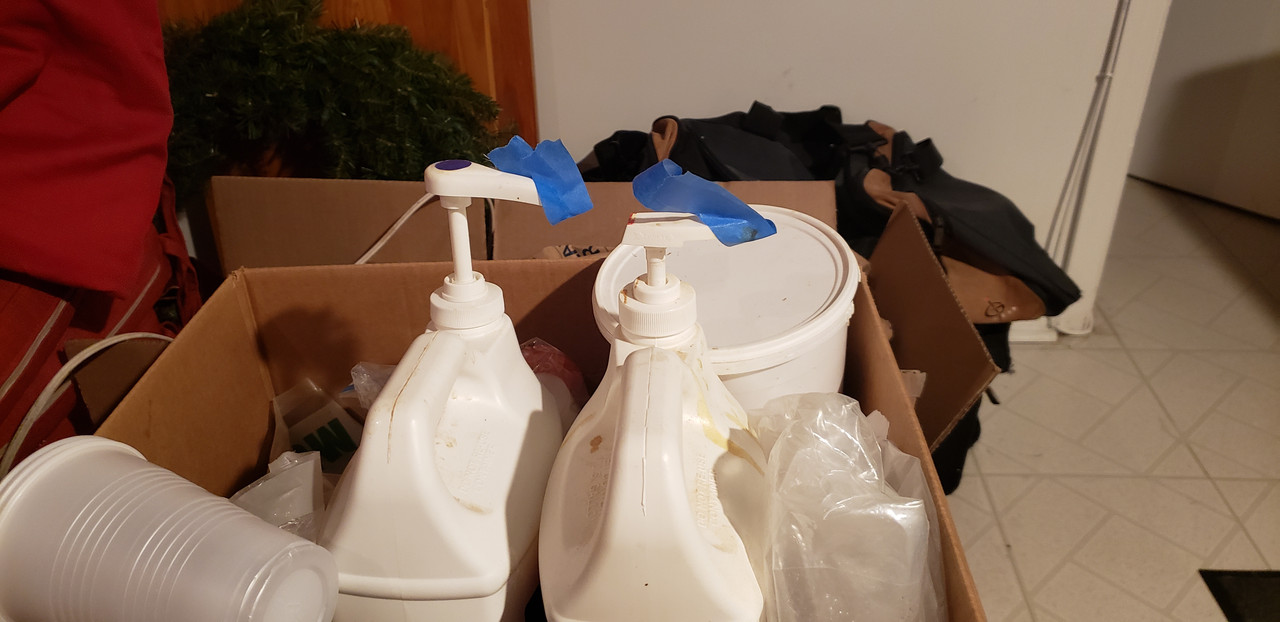
if between uses, you mean between projects and the epoxy is going away for a long time (e.g., months), i actually just follow the same regimen above. i consider the spiggots disposable and basically use them as long as they function. i don't recommend trying to remove and/or clean them. with the regimen above, i have gotten years between pumps and have even moved them to new epoxy containers....so i have a good inventory of spare pumps now :)
h
How about general clean up tips?
I just joined my first two pieces on my Millcreek 13 kit and while I thought I had thought it all through... I'm new to composite work and would appreciate all "post glueing tips"
Devin
You are going to develop your own "system" and will have more mess and waste than you might desire, but as you get experience, your system will improve. First, short answers to your specific questions.
How about general clean up tips?
When building in full swing, I probably fill a large garbage can per week with leftover rollers, gloves, brushes, cups, fiberglass remnants, sandpaper, mixing sticks, paper towels, rags, etc.. DO NOT start throwing things in the trash before they are hardened, that's a risk of cook-off and fire.
Re-reading, I'll add done last thing. I make supports by pouding 3 nails up through boards of different sizes to fit different parts. I can then coat both sides and edges all at once, being left with only 3 very minor liitle pin-spot blemishes where the nails supported the down-side of the piece. You have to be carefull not to tip the thing off the supports when rolling or brushing on the second side or doing the edges. Doesn't work for all parts in all situations, but can greatly speed up some processes.
good luck- Bubblehead
Can't help myself from adding something else. Try to find an out of the way corner where you can set up an epoxy mixing station. A waist-high (or higher!) table as small as 2ftx2ft (or a little bigger) will do. Put down several pre-cut plastic sheets on top - you'll move your stuff aside and roll up and dispose of one sticky sheet every day or 3. Lay it out with your epoxy containers/pumps, gloves, tools, cups, one tub of wood flower, one tub of celofill, paper towels, vinegar/alcohol, etc. all ready at-hand. Wipe off the bottom of the epoxy containers & anything else that is sticky each time you refresh this workstation. Position your trash can nearby. Speeds things up and keeps everything neat and orderly.
Thank you for the advice
I used it today in fact.
one thing I might add. I have a ton of old plastic cups given free from a local pizza place. They are getting a 2nd life to catch pump drips, use as mixing cups, hold vinegar for any quick wipes that may be needed...
also cutting plastic sheets long enough to use part to catch drips as I put mustard on joints while elevated by spacing sticks, then fold onto itself to give a cleaner plastic surface during the clamping phase. Will see how that works tomorrow when I unclamp.
Everything above's worth noting for how you work with two-part epoxy.
Working clean is applicable for pretty much anything that has a potential for making a mess.
A couple of observations I can contribute are –
Resin doesn't seem to gum up pump nozzles nearly as quickly as hardener. I've used the masking-tape method for short term nozzle covering both and it's effective.
Another tip is to leave the pump down once you're mixing your last batch for a session. You can lock them down with a half-twist, they return to the same state as when they were delivered new. This minimizes the amount of product that's left in the pump itself; when you start your next batch you'll draw fresh product up into the pump as you begin.
Nozzles still need a clean-up. Vinegar wipe's enough and eases adding the masking tape 'cap' particularly on the hardener's pump where build-up will happen otherwise. I find the wipe-and-cover easier with nozzle locked down too, otherwise there's a tendency to put downward pressure on the extended pump mechanism that can cause drippage... and allow time enough for the vingear to dry off (or use denatured alcohol for the wipe) before you apply tape.
I like the "leave the pump down" idea; going to try that. Here's a question as concerns the shorter red hardener pump. Mine has this tendency to draw only air the first pump or two, even tho the container is full enough to well cover the bottom of the straw tube. It's annoying because it messes up the 2:1 ratio. Any ideas on how to preven that? The blue resin pump never has this problem. Thanks
Pump it into a cup or something until it stops sputtering, pour the cup back into the jug.
Laszlo