I was hoping to put another coat of epoxy on. But everything is wet. So excess glass removal is the order of the day. It took about two hours with these tools. I did succeed in getting a hard composite edge everywhere. But I remembered that a lot of this gets trimmed to fit the boat later so I doubt the juice was worth the squeeze. I did not see any epoxy drips on the other side.


So the deck seems to fit everywhere except right at the motor well. Is that usual or did I get something wrong? I penciled in how much I’d have to remove from the deck.


So a minute or two with a straight edge shows me that cutting this mortise was always going to happen. Guess that’s just part of the trimming the footwell chapter.

Trimmed the deck for fit all afternoon. The Whiteside 1/4 spiral upcut router bit worked well on glass covered plywood. Just shaving it off little by little. I’m fairly inexperienced with the router but with some diy fences it did well enough. Also used the good old bastard file plenty.


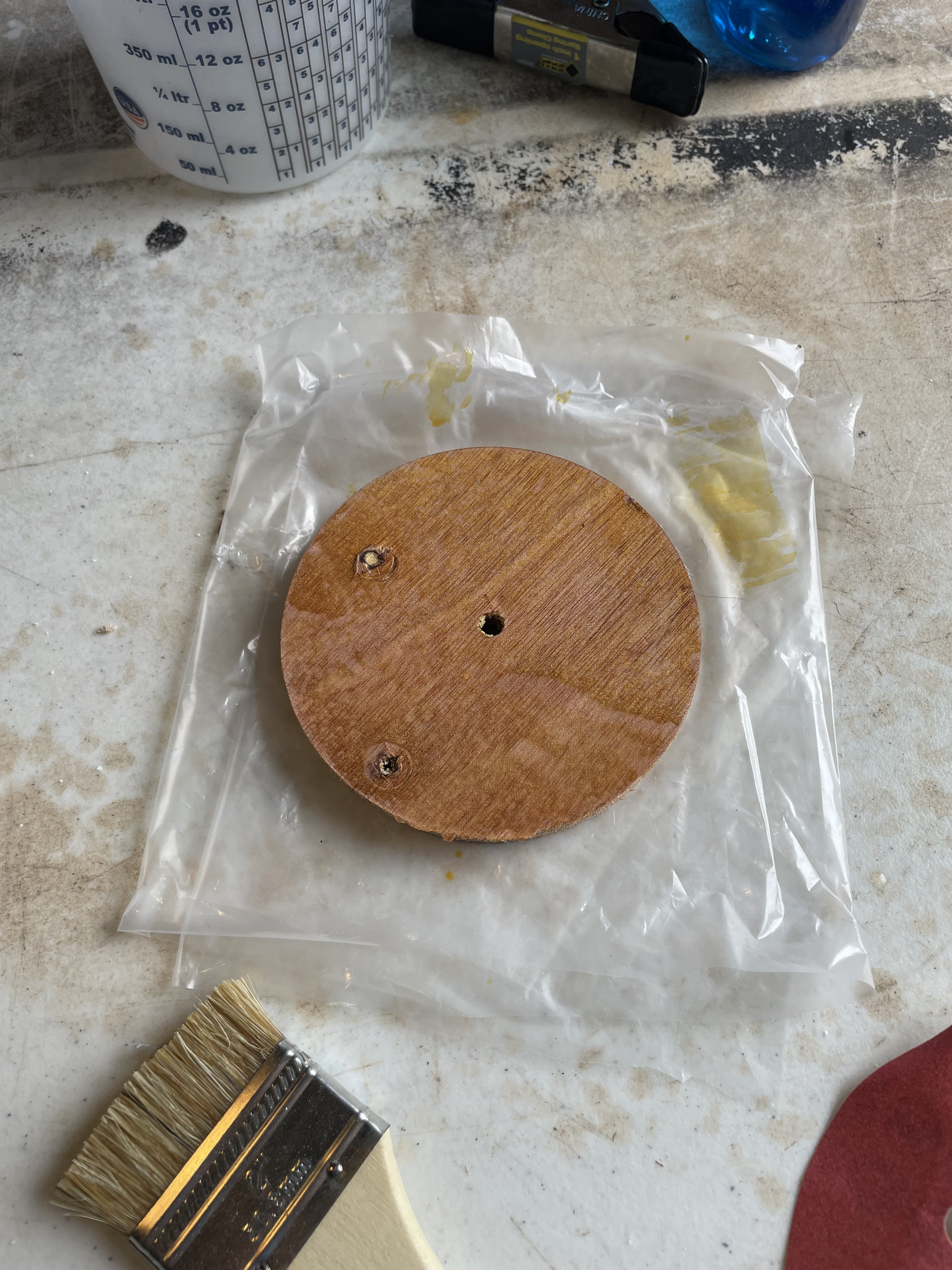
First cetol over MAS epoxy test. Sample had two coats of epoxy and has cured for several weeks. Washed with warm water. Sanded 180 grit. Cleaned with mineral spirits and dried. One thin coat of Cetol applied. Hot, humid, and breezy afternoon, sample is in the shade.

I estimate the sample got about 9 hours of cure time before the rain came. It was sitting under the carport in the boat yard so it might have got misted a little. I’ll check it and add a second coat this afternoon.
Is this Sikkens Cetol? If so, my understanding is it should not be applied over epoxy. It is meant to soak into the wood and provide a breathable finish that protects the wood. I used it on my spars (with no epoxy on them) and it has held up very well.
1 Like
Yes it is Sikkens Cetol. I am applying it over epoxy. I’m doing a little test to see if it can be done in a reasonable way. If it works out on my test piece, I do plan to use it on the deck of my boat.
Checked the sample at 20 hours. It’s dry feeling, not tacky, and a little rubbery. The weather is high humidity, scattered showers, temperature is 76 degrees. These conditions have obviously slowed the cure. I’m going to delay testing till the sample is cured. Sanded all mating surfaces for bedding the deck to the boat.
I agree with Steve, sikkens is not recommended over epoxy. Save yourself a lot of trouble and use a good spar varnish as recommended by CLC. Sikkens would be fine on bare wood like mast and spars if you want a soft finish. It is not necessary to epoxy those parts.
1 Like
Thanks Bruce. May as well see the experiment through. By hour 24 the Cetol is hard enough to not show a thumbnail indentation. Tomorrow I’ll do further tests.

If you are wondering if the crazy guy in Tennessee bedded his deck down in the rain. That’s okay. Plastic is to keep epoxy drips out of my lockers.


The rain ended up being a blessing. It cut the heat from the 90’s to the mid 70’s and bought me the time I needed to mix up the six piping bags of thickened epoxy to bed the deck down. I’ve done a little math on all the objects that I piled on the deck it comes out to just over 500 pounds of weight.
Just ordered a couple more gallons of MAS resin and slow hardener from CLC. Expensive but I do not want to run out when I’m glassing the hull. Better safe than sorry.
Cetol over epoxy experiment continues. I just brought the sample in for a minute to get photos. One coat cured outside under shade, rainy, humid conditions. Temps mid 70s. 65 hours curing time. Thumbnail doesn’t leave a dent under very firm pressure. If I push hard enough to hurt my thumb I can see a tiny partial indent under magnifying glass. 3M painters tape pressed down to the cetol and burnished firmly. Tape ripped off fast. Maybe one tiny speck (smaller than the head of a pin) of Cetol on the sticky side. No visible damage to sample. Misting sample with water, the water beads up. Sanded with 180. May have burned through to bare wood. The paper didn’t gum up but does have some dust stuck to it. Mental note next time use 220.


Sample back in the boatyard. Cleaned with warm water and dried. Second coat applied. Burn through not as bad as first appeared. Once I cleaned it, it still looked solid.


The deck bedded down real nice everywhere except about a 1/2” gap between the port side seat and the hull. For about 12”. It seesawed there on the stringers. I didn’t want to drill holes or drive screws so I biased the weight towards the foot well. I’m going to just fill the gap with fillet. This is my first pass. I’ll let this cure a little and then make another pass over the trouble area.


26 hours cure time on second coat. Surface is hard. Thumbnail leaves no imprint. Smells like it’s still offgassing solvent. I’ve slid it into the sun for the photo but it cured in the shade. The temps were mostly low 80’s with high humidity and spotty rain showers.
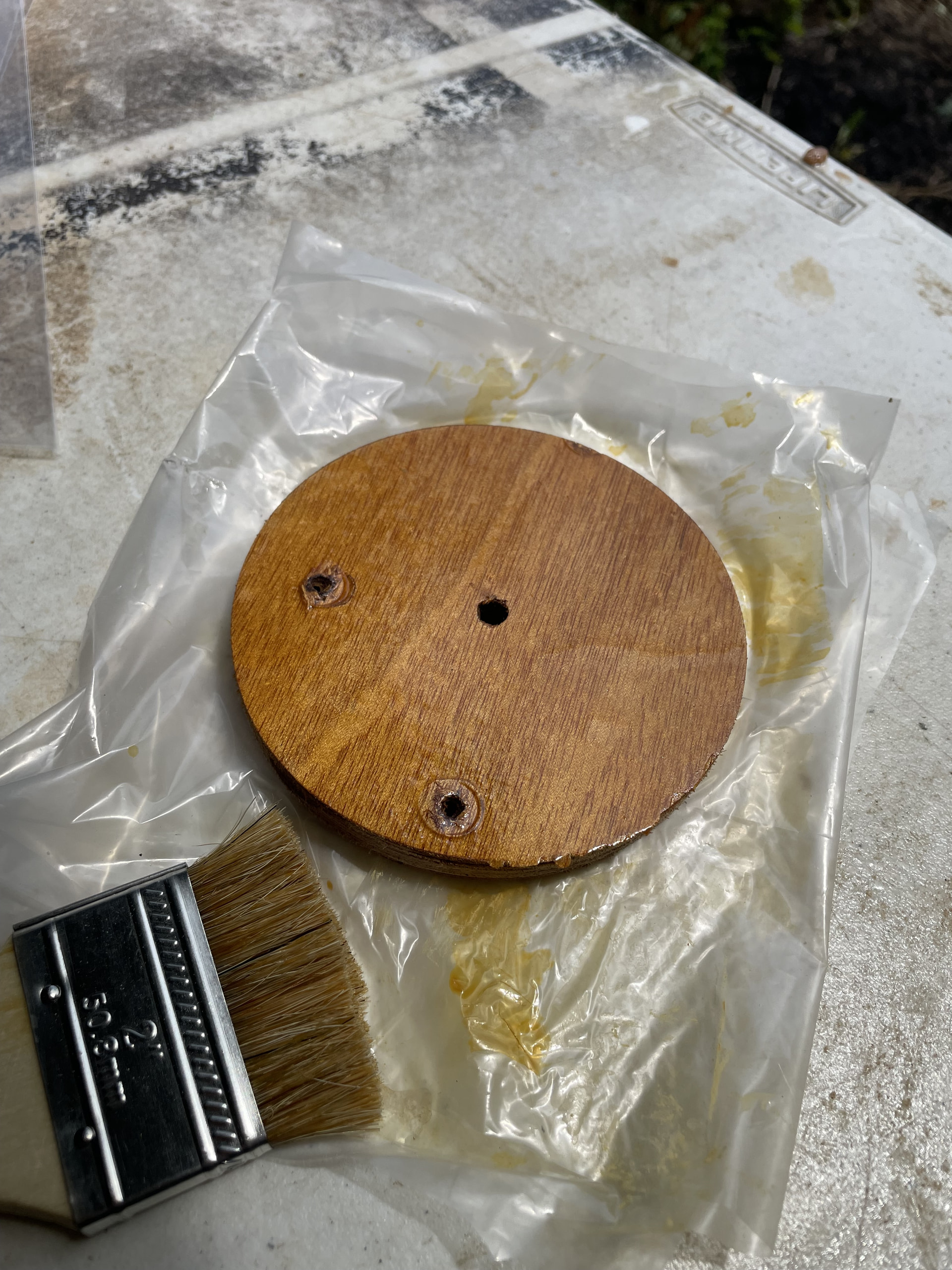
I decided since the surface was hard to go ahead and apply the third coat. So the third coat applied at hour 26 of the second coat cure. The surface was washed in warm water with a few drops of dawn dish soap. It was scuffed with a gray scotch brite pad and dried thoroughly. I may have goofed and not rinsed it with clean water after the water with a few drops of soap. Ooops. I also haven’t been very good at cleaning this chip brush out with mineral spirits, it’s the very same brush from the first day. Nonetheless coat three went on smoothly and the brush strokes flattened on their own. I think it looks decent so far.

